Tankers: 40% of the Global Seaborne Crude Oil Exports Affected by the War in the Middle East

Tankers: 40% of the Global Seaborne Crude Oil Exports Affected by the War in the Middle East

in Hellenic Shipping News
21/03/2026


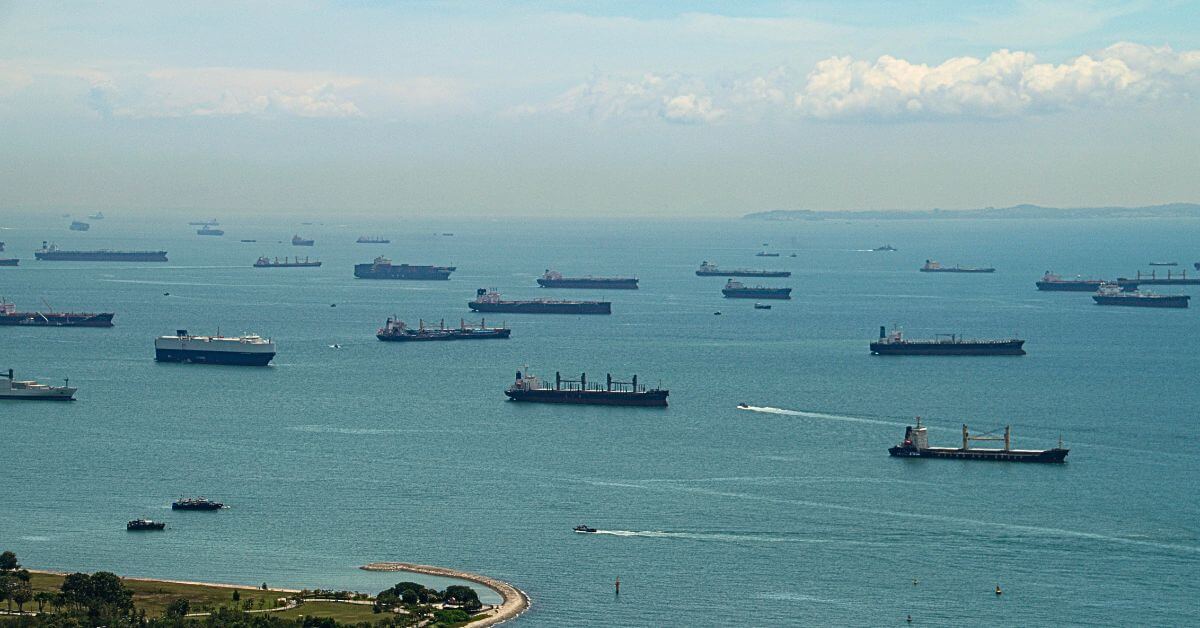
The turmoil in the global tanker and energy markets from the current crisis in the Middle East could soon lead to a global issue, with 40% of total seaborne crude oil exports affected. In its latest weekly report, shipbroker Banchero Costa said that “in Jan-Dec 2025, global crude oil loadings went up by +2.0% y-o-y to 2223.8 mln tonnes, excluding all cabotage trade, according to vessels tracking data from LSEG. This year started even better, with global crude oil loadings in Jan-Feb 2026 up by +6.3% y-o-y to 362.5mln tonnes. Exports from the Arabian Gulf were up by +2.7% y-o-y to 142.6 mln t in JanFeb 2026, accounting for 39.3% of seaborne crude trade. From South America, exports increased by +30.1% y-o-y to 41.8 mln t, with a share of 11.5%. Exports from Russian ports (including oil of Kazakh origin) declined by -4.7% y-o-y in Jan-Feb 2026 to 34.3 mln tonnes, or 9.5% of global trade. From the USA, exports volumes declined by -3.8% y-o-y at 29.1 mln t in Jan-Feb 2026, an 8.0% share. From South East Asia exports increased by +56.7% y-o-y to 20.9 mln t in Jan-Feb 2026 (but this inevitably also reflects changes in the re-export of Russian origin volumes)”.

Source: Banchero Costa

According to Banchero Costa, “in terms of demand, the top seaborne importer of crude oil in Jan-Feb 2026 was Mainland China, accounting for 24.0% of global trade….


Full report available at the source:
Read Full Article on Hellenic Shipping News »

IMO Council condemns attacks on shipping, calls for safe-passage framework in Strait of Hormuz

IMO Council condemns attacks on shipping, calls for safe-passage framework in Strait of Hormuz

in International Shipping News
21/03/2026

IMO Council condemns attacks on merchant ships and urges international coordination to safeguard civilian shipping, during extraordinary session in London.

The Council of the International Maritime Organization (IMO) has strongly condemned the threats and attacks against vessels and purported closure of the Strait of Hormuz, in line with UN Security Council Resolution 2817, which have adversely affected merchant and commercial vessels and threatened the safety and welfare of seafarers.

The Council called for a coordinated approach to security be adopted and that the response be internationally coordinated. It reiterated that the exercise of navigational rights and freedoms by merchant and commercial vessels, in accordance with international law, must be respected.

In his closing remarks, IMO Secretary-General said: “Let it be the responsibility of each and every one of us to demonstrate that inaction is not an option, that words alone are not sufficient. Together, we can drive the change required to protect the wellbeing of those who have no voice and safeguard the principle of freedom of navigation.”

Protection, safety and welfare of seafarers

The Council urged that all attacks on ships affecting innocent civilian seafarers be halted immediately. It called upon Member States to ensure the continuous provision of water, food, fuel…


Full report available at the source:

Read Full Article on Hellenic Shipping News »

Rising costs: The surge in bunker prices is reshaping dry bulk freight dynamics

Rising costs: The surge in bunker prices is reshaping dry bulk freight dynamics

in Dry Bulk Market,International Shipping News
21/03/2026


Surging bunker prices are reshaping freight dynamics, with fuel costs now accounting for a significantly larger share of freight than usual. While all vessels are exposed to high prices, scrubber-fitted ships remain relatively better positioned. This creates further upside risk for freight rates despite limited disruption to dry bulk fundamentals.

While the US/Israel–Iran conflict has had a limited impact on trade flows and vessel supply, its indirect effect on bunker prices is becoming increasingly significant. The escalation in the region has pushed up crude prices and tightened supply chains, driving up bunker prices across major hubs. This has shifted the market dynamic away from vessel availability towards rising input costs.

The impact is now visible in freight markets. Using Singapore VLSFO as a benchmark, bunker prices have risen by more than 100% from the February 2026 average, feeding directly into voyage economics. On the C3 route, freight rates have spiked by around 24% over the same period. However, the more significant change lies in cost structures. For a non-scrubber fitted Capesize vessel carrying 170,000 tonnes of iron ore, bunker costs rose from less than 50% of total freight in February to over 85% in March.

This signifies a shift in cost dynamics, with fuel costs now accounting for a much larger share of…


Full report available at the source:

Read Full Article on Hellenic Shipping News »

The Email Divide at Sea: What Greece, Cyprus, the Gulf, Turkey, and Africa Reveal About Maritime Cyber Risk

The Email Divide at Sea: What Greece, Cyprus, the Gulf, Turkey, and Africa Reveal About Maritime Cyber Risk

in Hellenic Shipping News
21/03/2026


Email is still the spine of maritime operations. Chartering instructions, spares orders, crew changes, port documentation, vendor payments to name a few. Most of it moves through inboxes, even as ships add new digital tools.

But the way shipping markets treat email risk is far from uniform. In my work across Greece, Cyprus, Turkey, the Gulf, and parts of Africa, I see a widening “email divide” that has little to do with awareness campaigns and everything to do with operational culture, local infrastructure, and whether companies treat support as a strategic capability or an afterthought.

The truth is simple: you can’t secure what you can’t support. And you can’t support what you don’t understand in the context of how ships actually operate.

In Greece and Cyprus, IT teams tend to be more mature and demanding. Many operators have strong internal capability, experienced shoreside teams, and higher expectations from vendors.

That’s the good news. The harder part is cultural, and it’s not a criticism, it’s a reality. Greeks are passionate. Everything is urgent. Decisions get made quickly, operations move fast, and there is limited patience for delays.

This urgency is not “bad culture.” It’s often what keeps ships moving. But it creates a friction point with email security, which typically depends on verification steps, formal…


Full report available at the source:

Read Full Article on Hellenic Shipping News »

Middle East conflict weighs further on slowing trade outlook

Middle East conflict weighs further on slowing trade outlook

in World Economy News
21/03/2026

World trade is set to slow in 2026 following stronger than expected growth in 2025 on the back of surging trade in AI-enabling products. WTO economists warn that the ongoing conflict in the Middle East could further reduce trade growth if energy prices remain elevated, noting that it would also put pressure on food supplies and services trade due to travel and transport disruptions. Prospects could still improve if the conflict ends quickly and the boom in AI spending continues.

The latest “Global Trade Outlook and Statistics” released on 19 March provides a baseline growth scenario excluding energy price shocks, forecasting that global merchandise trade growth would slow to 1.9% in 2026 from 4.6% in 2025 as trade is expected to normalize following a surge in AI-related products and the frontloading of imports to avoid new tariffs. World merchandise trade volume is then projected to grow by 2.6% in 2027. Commercial services trade growth will ease to 4.8% in 2026 after this year’s 5.3% rise, then accelerate again to 5.1% in 2027. Together, goods and services trade will grow 2.7% in 2026 compared with 4.7% in 2025. Global GDP growth is projected to moderate slightly from 2.9% in 2025 to 2.8% in both 2026 and 2027.

However, a scenario where both crude oil and liquefied natural gas (LNG) prices remain elevated throughout 2026 would shave 0.3 percentage points off the GDP…


Full report available at the source:

Read Full Article on Hellenic Shipping News »

India Lists 22 Ships On Evacuation List For Safe Passage Through Strait Of Hormuz Amid Rising Gulf Tensions

India Lists 22 Ships On Evacuation List For Safe Passage Through Strait Of Hormuz Amid Rising Gulf Tensions

ships
Image for representation purposes only

India has identified 22 ships heading to its ports for safe movement through the Strait of Hormuz as tensions in the Gulf region continue to affect shipping.

Most of these vessels are carrying fuel, making their safe passage important for India’s energy supply.

Officials said 20 of the 22 ships are crucial for the country’s energy needs. Together, they are carrying about 2.15 lakh metric tonnes of LNG, 3.21 lakh tonnes of LPG, and 16.76 lakh tonnes of crude oil.

These ships include both Indian-flagged and foreign-flagged vessels, but all are bound for India.

Out of these, 10 ships operate under the Indian flag. The rest are registered in countries like the Marshall Islands, Liberia, Greece, Malta, and Portugal.

The cargo includes three LNG carriers, ten LPG vessels, and seven crude oil tankers. Two Indian container ships have also been included in the plan to ensure they pass safely.

The Strait of Hormuz is one of the most important shipping routes in the world. A large share of global oil trade passes through this narrow waterway.

India depends heavily on this route for its oil and gas imports. Any disruption here can affect fuel supply, LPG availability for households, CNG supply, and even fertiliser production.

Several government agencies are working together to manage the situation. These include the Ministry of Ports, Shipping and Waterways, the Directorate General of Shipping, and the Ministry of Petroleum and Natural Gas.

The…


Full report available at the source:

Read Full Article on Marine Insight »

Watch: Israel Strikes Iranian Navy Sites In Caspian Sea, Destroys Missile Boats In First-Ever Attack

Watch: Israel Strikes Iranian Navy Sites In Caspian Sea, Destroys Missile Boats In First-Ever Attack

ship attack
Image for representation purposes only

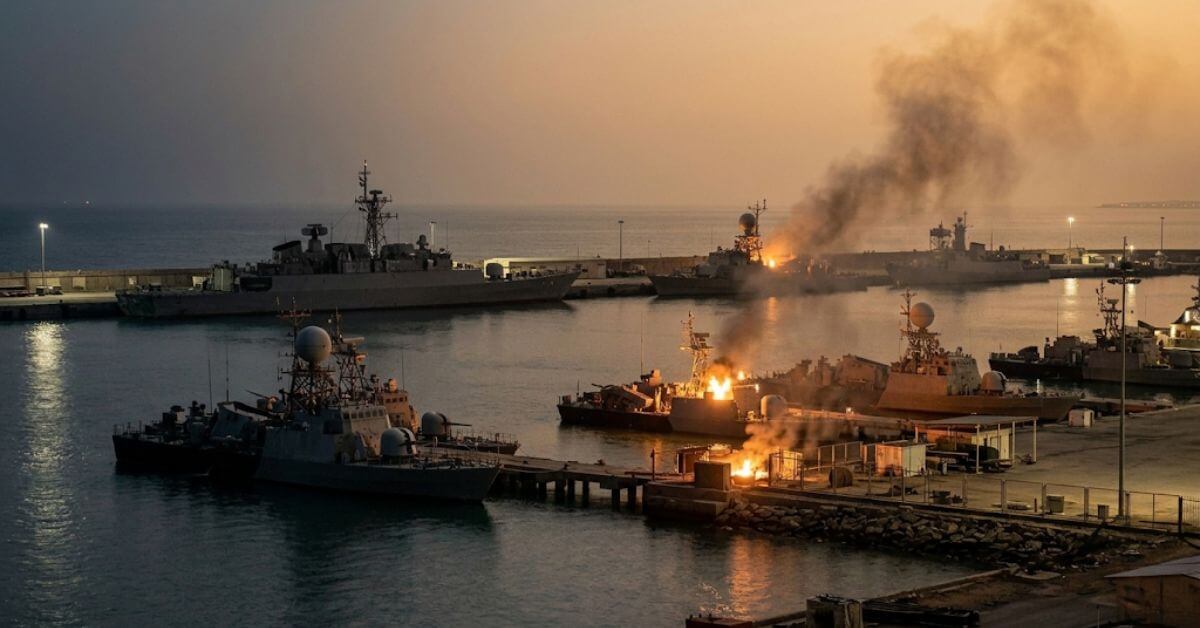
Israel carried out airstrikes on Iranian Navy targets in the Caspian Sea late Wednesday night, marking the first time it has hit this region since the war began.

The strikes targeted a major naval port near Bandar Anzali in northern Iran, where several vessels and key facilities were damaged or destroyed.

According to the Israeli military, the attack destroyed four missile boats fitted with air defence and anti-submarine systems, along with a corvette warship.

Several smaller support and patrol vessels were also hit. Some of the ships were docked at the port, while others were out at sea when they were targeted.

The strikes also damaged a naval command centre used to control operations in the area. Facilities used for repairing and maintaining military vessels were hit as well.

Israeli officials said the aim was to weaken Iran’s naval capabilities and limit its ability to operate in the region.

Military officials said the missile boats, although based in the Caspian Sea, could still pose a threat to Israeli aircraft because of their anti-aircraft systems.

By destroying them, Israel aimed to…


Full report available at the source:

Read Full Article on Marine Insight »

U.S Navy To Deploy Wall-Climbing Robots Across Its Ships In The Pacific Fleet

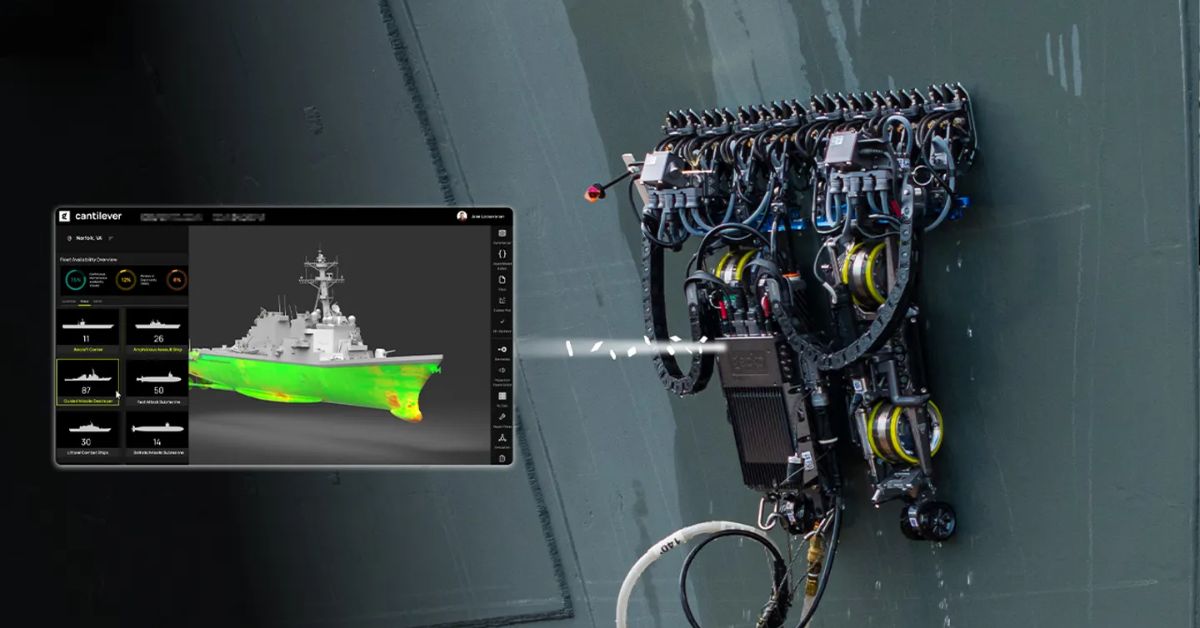
Image Credits: Gecko Robotics

Gecko Robotics was awarded a $71 million contract by the U.S Navy to build wall-climbing robots and AI systems for naval ships of the Pacific Fleet.

This is a one-of-a-kind contract granted to a robotics firm; however, it will improve efficiency manifold, per Navy officials.

These robots will be able to reach difficult places on board, such as hulls, ballast tanks and confined spaces; crawling or flying to collect data which will be analysed by the AI-powered platform Cantilever.

It will identify maintenance needs and areas that need urgent attention 50 times faster and more accurately than manual inspections, claims Gecko Robotics.

In a documented case, a single robot inspection of a flight deck saved the company’s client over 3 months of maintenance delays.

This deal also signals a rampant advancement of robot tech and its entry into the shipbuilding sector.

Gecko operates around 250 robots across commercial and government customers, ​and plans to build ⁠50 to 60 more in 2026.

According to the 5-year indefinite-delivery, indefinite-quantity contract, the robotics company will work on 18 ships of the Pacific Fleet, including littoral combat ships, amphibious warships and destroyers with an initial award of up to $54 ​million.

The company said that it worked across the Navy’s surface fleet and on both Virginia and Columbia-class nuclear submarine programs.


Full report available at the source:

Read Full Article on Marine Insight »

World’s First Hydrogen-Powered Cruise Ship “Viking Libra” Launched At Ancona Shipyard

World’s First Hydrogen-Powered Cruise Ship “Viking Libra” Launched At Ancona Shipyard

fincantieri
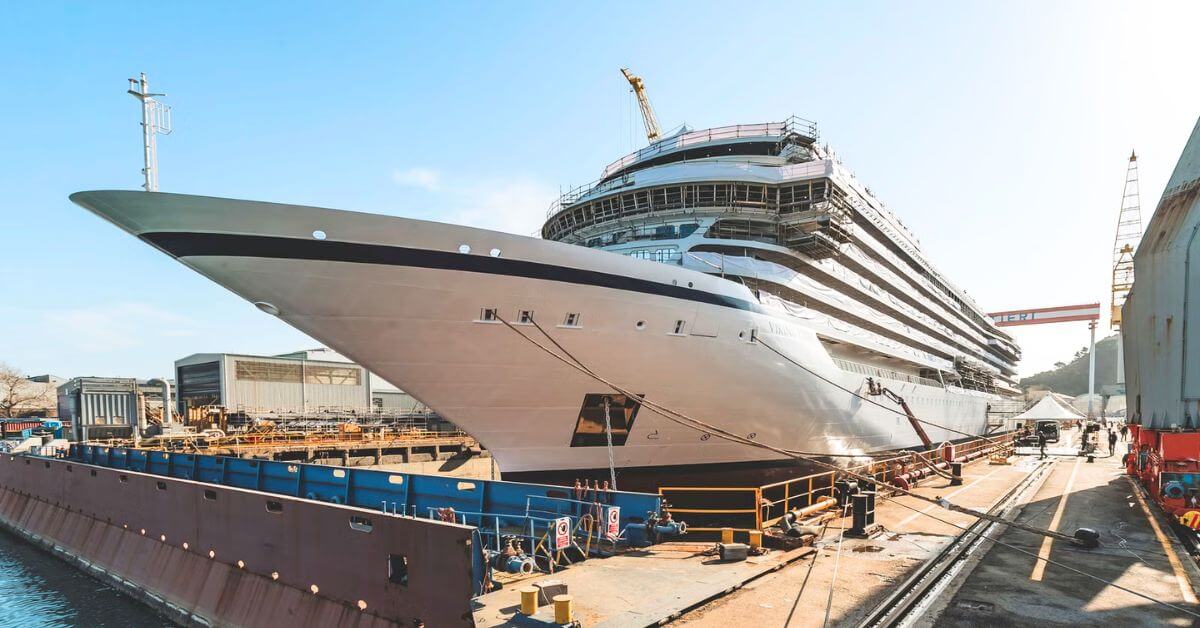
Image Credits: Fincantieri

Italian shipbuilder Fincantieri has launched the “Viking Libra,” the world’s first hydrogen-powered cruise ship, at its Ancona yard. The vessel is being built for Viking and is expected to be delivered by the end of 2026.

The “Viking Libra” will have a gross tonnage of about 54,300 tons and a length of 239 meters. It is designed to carry up to 998 passengers in 499 staterooms.

What makes the vessel different is its propulsion system, which will use liquefied hydrogen along with fuel cells. This will allow the ship to operate with zero emissions in certain conditions, making it suitable for sailing in environmentally sensitive areas where stricter rules apply.

This project is part of the ongoing partnership between Fincantieri and Viking, which started in 2012. The total number of vessels linked to this collaboration has reached 26.

cruise ship
Image Credits: Fincantieri

The continued orders show steady demand for modern cruise ships, especially those with improved environmental performance.

The Ancona shipyard, where the vessel was launched, plays an important role in Fincantieri’s production network. The facility covers around 360,000 square meters and can build ships up to 60,000 gross tons.

It has lifting systems capable of handling up to 500 tons and can construct hull sections weighing around 1,200 tons. Since 2009, more than 20 ships have been delivered from this yard, supported by a workforce of about 3,700 people.

The company is also planning…


Full report available at the source:
Read Full Article on Marine Insight »