Category Archives: RSS News

U.S. Sends Thousands Of Marines And Sailors To Middle East Amid Rising Tensions With Iran

U.S. Sends Thousands Of Marines And Sailors To Middle East Amid Rising Tensions With Iran

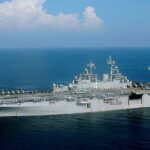
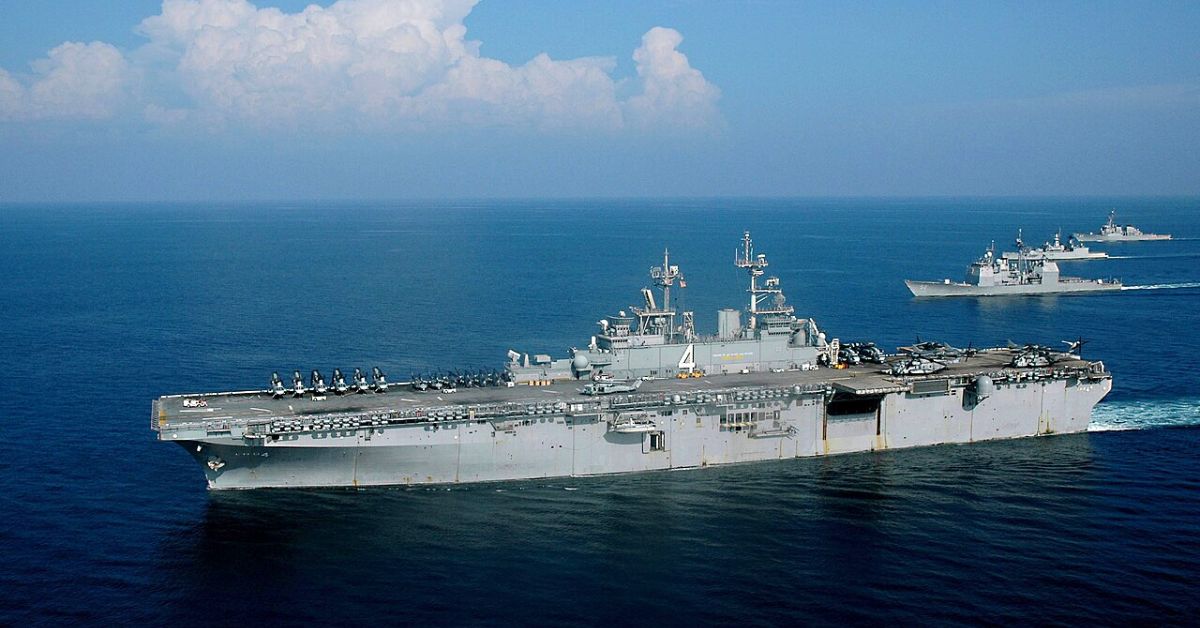
USS Boxer (LHD-4)
Image Credits: Wikipedia

The United States is sending thousands of Marines and sailors to the Middle East as tensions with Iran continue to grow.

The deployment includes the amphibious assault ship USS Boxer along with its Marine unit and supporting warships.

Around 2,500 Marines from the 11th Marine Expeditionary Unit are being sent from the US West Coast, about three weeks earlier than planned.

With this, the total number of US troops in the region will rise to around 50,000, and there will be two Marine units ready for quick operations.

Officials said no final decision has been made to send troops into Iran. However, the current deployment gives the US more options if the situation worsens.

President Donald Trump said earlier that he is not sending troops “anywhere,” but also made it clear that he would not share details of any plans.

The focus remains on securing the Strait of Hormuz, which handles a large share of the world’s oil supply.

US forces have increased their operations in the area, targeting Iranian fast boats and drones that could threaten commercial shipping.

There are also discussions about possible action near Iran’s Kharg Island, which is used to export most of the country’s oil.

Additionally, the aircraft carrier USS Gerald R. Ford is heading to Greece for repairs after spending over nine months on deployment.

The US Navy plans to send the USS George H.W. Bush to replace it and maintain its presence in the region.

References: Reuters, TOI


Full report available at the source:
Read Full Article on Marine Insight »

India Allows Essential Supplies To Crew On Seized Iran-Linked Ships In Suspected Illegal Fuel Transfer

India Allows Essential Supplies To Crew On Seized Iran-Linked Ships In Suspected Illegal Fuel Transfer

tankers
Image for representation purposes only

The Bombay High Court has allowed the owners of three ships seized by the Indian Coast Guard to send essential supplies to the crew.

The ships were detained on February 6, around 100 nautical miles off Mumbai, over suspected illegal transfer of petroleum products within India’s Exclusive Economic Zone (EEZ).

The court’s decision ensures basic support for crew while the investigation into alleged smuggling activities continues.

A division bench of Justices Ravindra Ghuge and Abhay Mantri allowed the owners to send food, water, and other necessities to crew members. The supplies will be delivered under strict security monitoring.

The court also permitted the companies, Balboa Shipping, Royal Princess Shipping, and Star Management Shipping, to assess the current market value of the vessels.

This valuation could be used if the court later considers releasing the ships against financial bonds.

The vessels, Asphalt Star, Stellar Ruby, and Al Jafzia, were intercepted by the Indian Coast Guard in February. Authorities had been tracking Asphalt Star since February 4 before stopping it at sea.

Investigators said the ships were involved in unauthorised ship-to-ship fuel transfers inside India’s EEZ.

Asphalt Star allegedly transferred around 30 metric tonnes of heavy fuel oil to Al Jafzia. It also delivered over 5,400 metric tonnes of high-viscosity bitumen to Stellar Ruby.

Officials reported that the vessels attempted to hide their identity by…


Full report available at the source:

Read Full Article on Marine Insight »

Iran Charges Up To $2 Million For Safe Passage In Strait Of Hormuz, Nations Hold Urgent Talks

Iran Charges Up To $2 Million For Safe Passage In Strait Of Hormuz, Nations Hold Urgent Talks

strait of hormuz
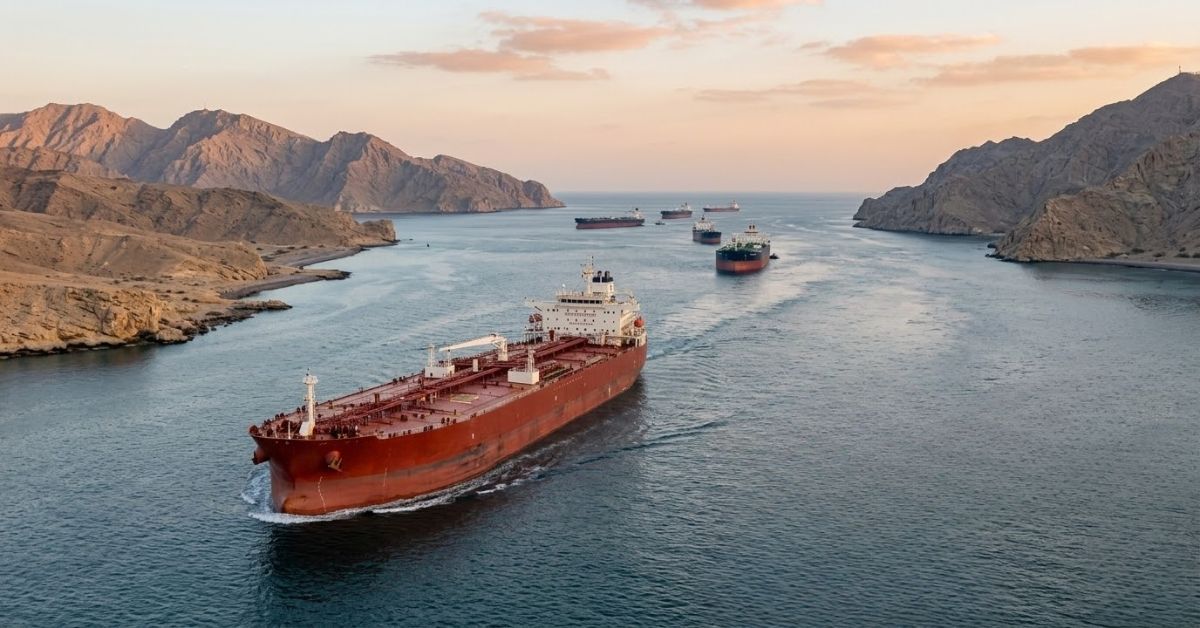
Image for representation purposes only

Iran has started controlling ship movement through the Strait of Hormuz by allowing only approved vessels to pass through a monitored route near its coast.

In at least one case, a tanker operator paid around $2 million to secure safe passage.

Per reports, Iran is guiding selected ships through a route close to Larak Island, where its naval forces carry out checks before letting vessels move ahead. 

A basic approval system has been put in place, where ships must share details such as ownership and cargo before entering the strait. Once cleared, they are allowed to pass one by one.

So far, at least nine vessels have used this route. These include LPG carriers, bulk carriers and government-linked tankers.

Two India-flagged LPG carriers, Shivalik and Nanda Devi, crossed the strait around March 13 after getting clearance through official talks.

Per reports, they were allowed to pass without paying any fee. A Pakistan-linked tanker and a few other vessels have also taken similar routes.

However, not all ships are getting through the same way. In at least one instance, a tanker operator is believed to have paid about $2 million to ensure safe passage through the strait. 

Approvals are being handled case by case, and there are signs that Iran may bring in fixed charges for transit in the future.

Several countries, including India, China, Pakistan, Iraq and Malaysia, are now in direct talks with Tehran to make sure their ships can pass…


Full report available at the source:
Read Full Article on Marine Insight »

Indian Captain Dies On Stranded Vessel Near Strait Of Hormuz, Family Seeks Urgent Repatriation

Indian Captain Dies On Stranded Vessel Near Strait Of Hormuz, Family Seeks Urgent Repatriation

oil tanker
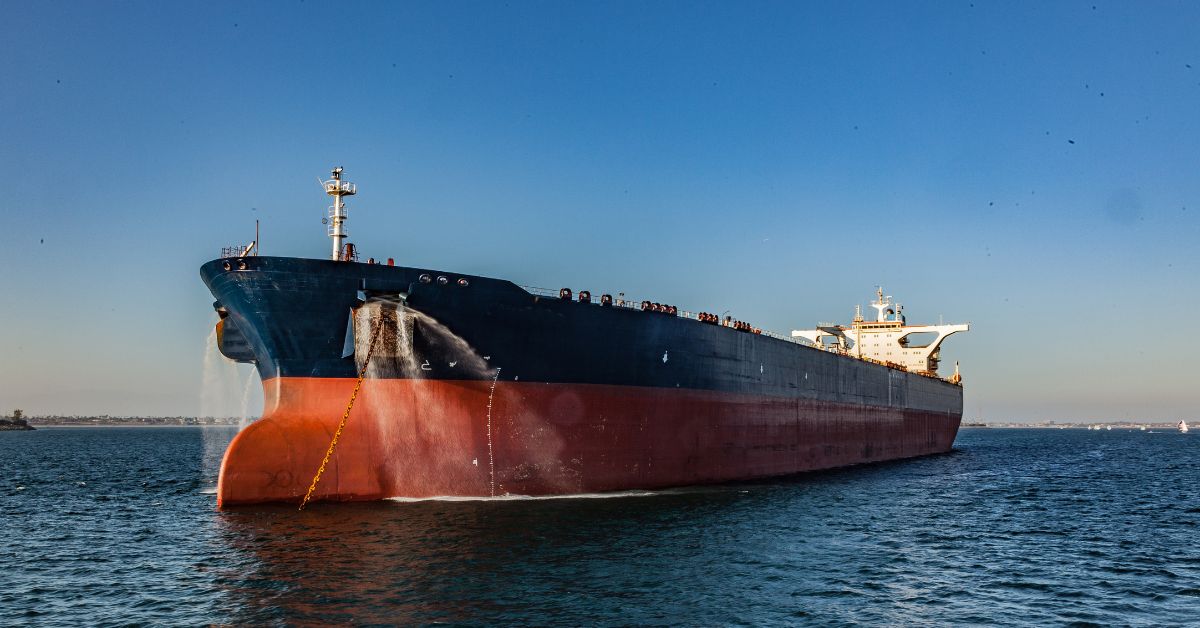
Image for representation purposes only

A 43-year-old Indian Merchant Navy captain from Ranchi has died on board an oil tanker near the Strait of Hormuz. His family is appealing to authorities for urgent assistance in bringing his body back to India.

Captain Rakesh Ranjan reportedly passed away on 18 March after suffering a suspected cardiac arrest while serving aboard the vessel ASP Avana (RPSL-MUM-172), which he had joined on 2 February.

His family said the ship had been stranded approximately 14 nautical miles off the Strait of Hormuz since 28 February, following a halt in regional maritime movement due to the ongoing West Asia conflict.

According to his elder brother, Umesh Singh, the shipping company informed the family that Ranjan had lost consciousness and collapsed from his chair on board.

Efforts were reportedly made to provide medical assistance, but permission for an emergency airlift was not granted. He was later transferred by boat to Port Rashid in Dubai, where he was declared dead.

The family has claimed that delays in medical evacuation may have contributed to his death, stating that several crucial hours were lost before he could receive treatment.

However, they are awaiting the post-mortem examination report to confirm the exact cause of death.

Ranjan’s body is currently being kept under police custody at a mortuary in Dubai, with reports indicating it is at Sheikh Rashid Hospital.

The repatriation process has reportedly begun but is facing delays, partly…


Full report available at the source:

Read Full Article on Marine Insight »

Tankers: 40% of the Global Seaborne Crude Oil Exports Affected by the War in the Middle East

Tankers: 40% of the Global Seaborne Crude Oil Exports Affected by the War in the Middle East

in Hellenic Shipping News
21/03/2026


The turmoil in the global tanker and energy markets from the current crisis in the Middle East could soon lead to a global issue, with 40% of total seaborne crude oil exports affected. In its latest weekly report, shipbroker Banchero Costa said that “in Jan-Dec 2025, global crude oil loadings went up by +2.0% y-o-y to 2223.8 mln tonnes, excluding all cabotage trade, according to vessels tracking data from LSEG. This year started even better, with global crude oil loadings in Jan-Feb 2026 up by +6.3% y-o-y to 362.5mln tonnes. Exports from the Arabian Gulf were up by +2.7% y-o-y to 142.6 mln t in JanFeb 2026, accounting for 39.3% of seaborne crude trade. From South America, exports increased by +30.1% y-o-y to 41.8 mln t, with a share of 11.5%. Exports from Russian ports (including oil of Kazakh origin) declined by -4.7% y-o-y in Jan-Feb 2026 to 34.3 mln tonnes, or 9.5% of global trade. From the USA, exports volumes declined by -3.8% y-o-y at 29.1 mln t in Jan-Feb 2026, an 8.0% share. From South East Asia exports increased by +56.7% y-o-y to 20.9 mln t in Jan-Feb 2026 (but this inevitably also reflects changes in the re-export of Russian origin volumes)”.

Source: Banchero Costa

According to Banchero Costa, “in terms of demand, the top seaborne importer of crude oil in Jan-Feb 2026 was Mainland China, accounting for 24.0% of global trade….


Full report available at the source:
Read Full Article on Hellenic Shipping News »

IMO Council condemns attacks on shipping, calls for safe-passage framework in Strait of Hormuz

IMO Council condemns attacks on shipping, calls for safe-passage framework in Strait of Hormuz

in International Shipping News
21/03/2026

IMO Council condemns attacks on merchant ships and urges international coordination to safeguard civilian shipping, during extraordinary session in London.

The Council of the International Maritime Organization (IMO) has strongly condemned the threats and attacks against vessels and purported closure of the Strait of Hormuz, in line with UN Security Council Resolution 2817, which have adversely affected merchant and commercial vessels and threatened the safety and welfare of seafarers.

The Council called for a coordinated approach to security be adopted and that the response be internationally coordinated. It reiterated that the exercise of navigational rights and freedoms by merchant and commercial vessels, in accordance with international law, must be respected.

In his closing remarks, IMO Secretary-General said: “Let it be the responsibility of each and every one of us to demonstrate that inaction is not an option, that words alone are not sufficient. Together, we can drive the change required to protect the wellbeing of those who have no voice and safeguard the principle of freedom of navigation.”

Protection, safety and welfare of seafarers

The Council urged that all attacks on ships affecting innocent civilian seafarers be halted immediately. It called upon Member States to ensure the continuous provision of water, food, fuel…


Full report available at the source:
Read Full Article on Hellenic Shipping News »

Rising costs: The surge in bunker prices is reshaping dry bulk freight dynamics

Rising costs: The surge in bunker prices is reshaping dry bulk freight dynamics

in Dry Bulk Market,International Shipping News
21/03/2026


Surging bunker prices are reshaping freight dynamics, with fuel costs now accounting for a significantly larger share of freight than usual. While all vessels are exposed to high prices, scrubber-fitted ships remain relatively better positioned. This creates further upside risk for freight rates despite limited disruption to dry bulk fundamentals.

While the US/Israel–Iran conflict has had a limited impact on trade flows and vessel supply, its indirect effect on bunker prices is becoming increasingly significant. The escalation in the region has pushed up crude prices and tightened supply chains, driving up bunker prices across major hubs. This has shifted the market dynamic away from vessel availability towards rising input costs.

The impact is now visible in freight markets. Using Singapore VLSFO as a benchmark, bunker prices have risen by more than 100% from the February 2026 average, feeding directly into voyage economics. On the C3 route, freight rates have spiked by around 24% over the same period. However, the more significant change lies in cost structures. For a non-scrubber fitted Capesize vessel carrying 170,000 tonnes of iron ore, bunker costs rose from less than 50% of total freight in February to over 85% in March.

This signifies a shift in cost dynamics, with fuel costs now accounting for a much larger share of…


Full report available at the source:

Read Full Article on Hellenic Shipping News »

India Lists 22 Ships On Evacuation List For Safe Passage Through Strait Of Hormuz Amid Rising Gulf Tensions

India Lists 22 Ships On Evacuation List For Safe Passage Through Strait Of Hormuz Amid Rising Gulf Tensions

ships
Image for representation purposes only

India has identified 22 ships heading to its ports for safe movement through the Strait of Hormuz as tensions in the Gulf region continue to affect shipping.

Most of these vessels are carrying fuel, making their safe passage important for India’s energy supply.

Officials said 20 of the 22 ships are crucial for the country’s energy needs. Together, they are carrying about 2.15 lakh metric tonnes of LNG, 3.21 lakh tonnes of LPG, and 16.76 lakh tonnes of crude oil.

These ships include both Indian-flagged and foreign-flagged vessels, but all are bound for India.

Out of these, 10 ships operate under the Indian flag. The rest are registered in countries like the Marshall Islands, Liberia, Greece, Malta, and Portugal.

The cargo includes three LNG carriers, ten LPG vessels, and seven crude oil tankers. Two Indian container ships have also been included in the plan to ensure they pass safely.

The Strait of Hormuz is one of the most important shipping routes in the world. A large share of global oil trade passes through this narrow waterway.

India depends heavily on this route for its oil and gas imports. Any disruption here can affect fuel supply, LPG availability for households, CNG supply, and even fertiliser production.

Several government agencies are working together to manage the situation. These include the Ministry of Ports, Shipping and Waterways, the Directorate General of Shipping, and the Ministry of Petroleum and Natural Gas.

The…


Full report available at the source:

Read Full Article on Marine Insight »

Watch: Israel Strikes Iranian Navy Sites In Caspian Sea, Destroys Missile Boats In First-Ever Attack

Watch: Israel Strikes Iranian Navy Sites In Caspian Sea, Destroys Missile Boats In First-Ever Attack

ship attack
Image for representation purposes only

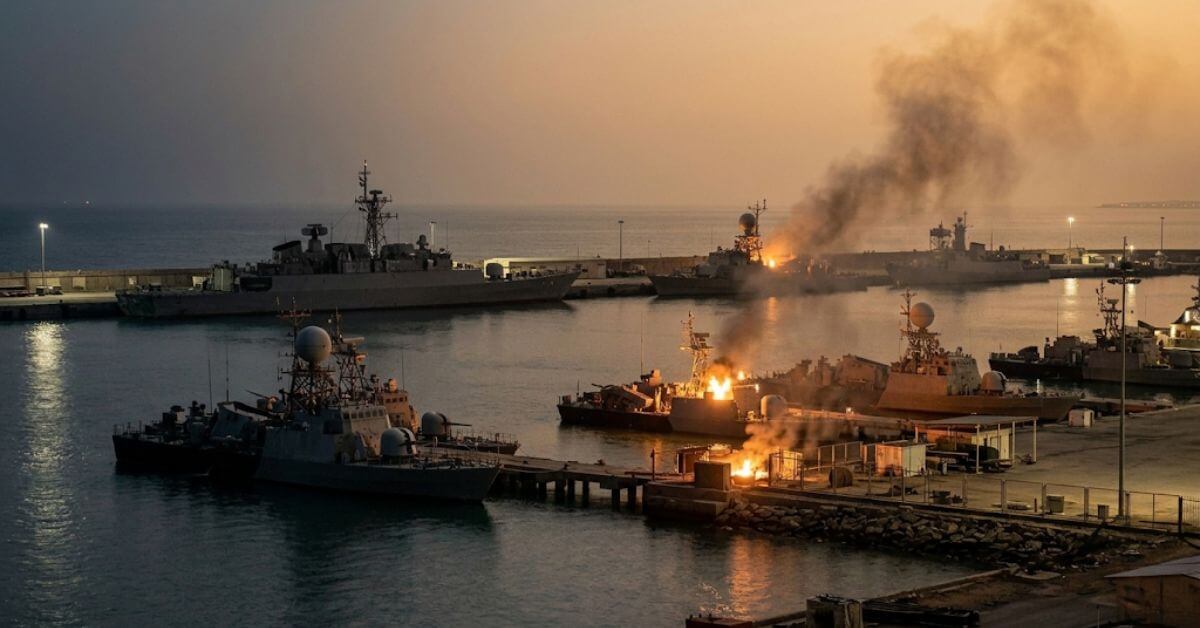
Israel carried out airstrikes on Iranian Navy targets in the Caspian Sea late Wednesday night, marking the first time it has hit this region since the war began.

The strikes targeted a major naval port near Bandar Anzali in northern Iran, where several vessels and key facilities were damaged or destroyed.

According to the Israeli military, the attack destroyed four missile boats fitted with air defence and anti-submarine systems, along with a corvette warship.

Several smaller support and patrol vessels were also hit. Some of the ships were docked at the port, while others were out at sea when they were targeted.

The strikes also damaged a naval command centre used to control operations in the area. Facilities used for repairing and maintaining military vessels were hit as well.

Israeli officials said the aim was to weaken Iran’s naval capabilities and limit its ability to operate in the region.

Military officials said the missile boats, although based in the Caspian Sea, could still pose a threat to Israeli aircraft because of their anti-aircraft systems.

By destroying them, Israel aimed to…


Full report available at the source:
Read Full Article on Marine Insight »

U.S Navy To Deploy Wall-Climbing Robots Across Its Ships In The Pacific Fleet

Image Credits: Gecko Robotics

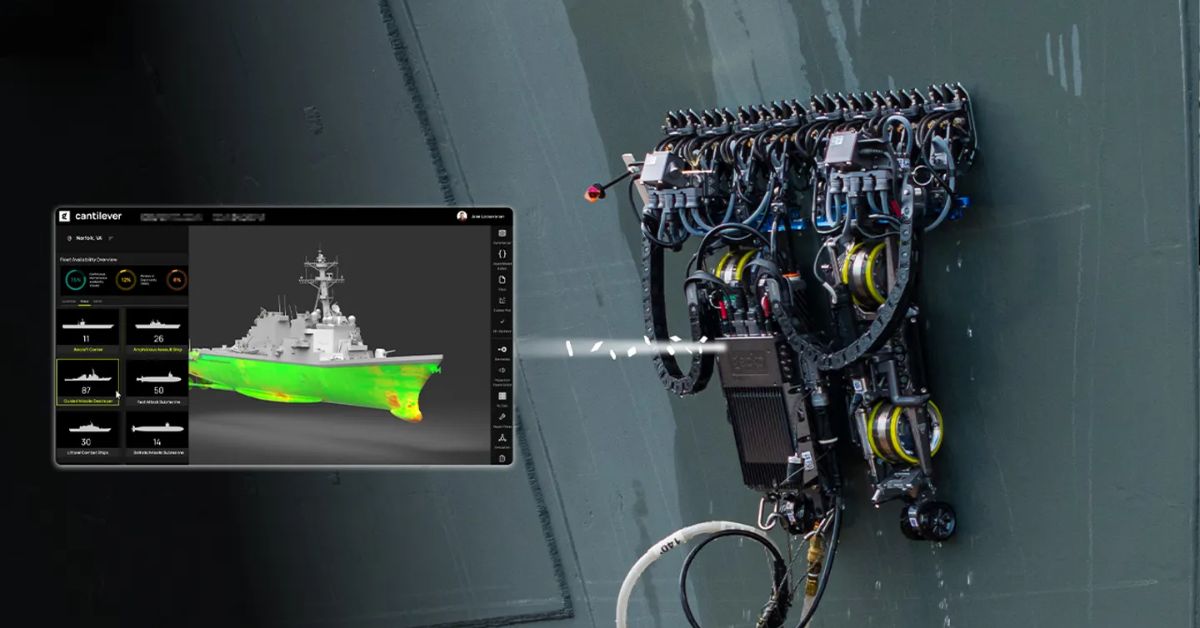
Gecko Robotics was awarded a $71 million contract by the U.S Navy to build wall-climbing robots and AI systems for naval ships of the Pacific Fleet.

This is a one-of-a-kind contract granted to a robotics firm; however, it will improve efficiency manifold, per Navy officials.

These robots will be able to reach difficult places on board, such as hulls, ballast tanks and confined spaces; crawling or flying to collect data which will be analysed by the AI-powered platform Cantilever.

It will identify maintenance needs and areas that need urgent attention 50 times faster and more accurately than manual inspections, claims Gecko Robotics.

In a documented case, a single robot inspection of a flight deck saved the company’s client over 3 months of maintenance delays.

This deal also signals a rampant advancement of robot tech and its entry into the shipbuilding sector.

Gecko operates around 250 robots across commercial and government customers, ​and plans to build ⁠50 to 60 more in 2026.

According to the 5-year indefinite-delivery, indefinite-quantity contract, the robotics company will work on 18 ships of the Pacific Fleet, including littoral combat ships, amphibious warships and destroyers with an initial award of up to $54 ​million.

The company said that it worked across the Navy’s surface fleet and on both Virginia and Columbia-class nuclear submarine programs.


Full report available at the source:

Read Full Article on Marine Insight »