
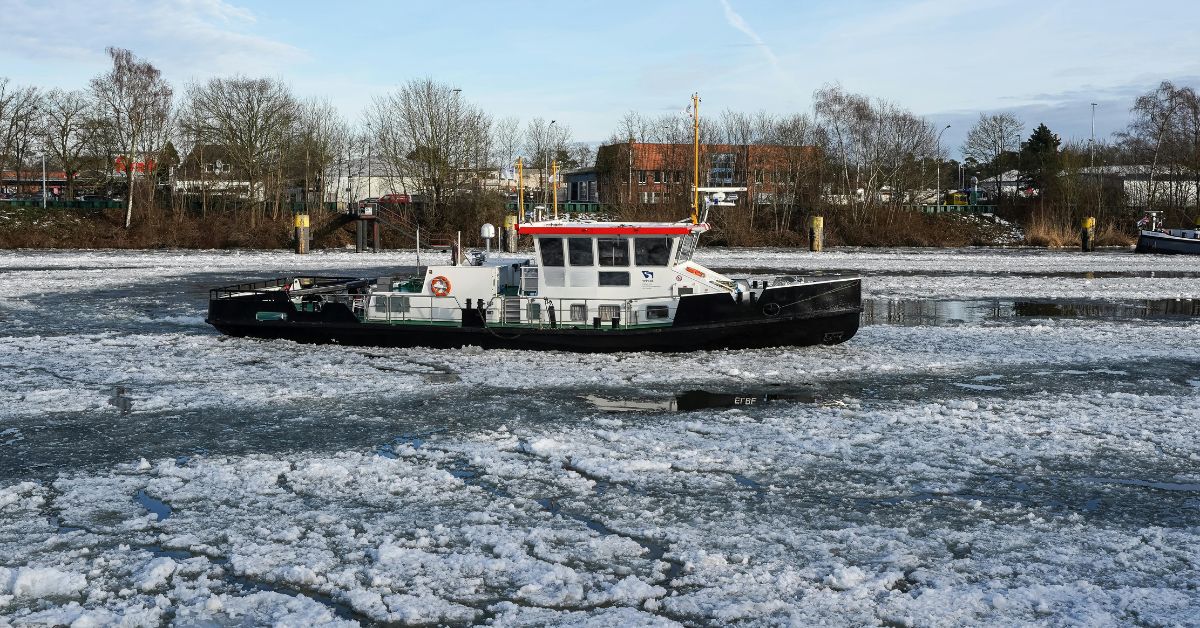
Image for representation purposes only
The U.S. Coast Guard said that it is prepared to help ships navigate the frozen Great Lakes, even though it is short of icebreakers.
11 Icebreaking vessels operate on the Great Lakes, with the U.S. providing 9 of them and the Canadian Coast Guard providing the other three.
Among the 9 icebreakers, two are in shipyards undergoing repairs, said Brian Smicklas, waterways management specialist and icebreaking coordinator for the U.S. Coast Guard.
One of them is a buoy tender, and the other is an icebreaking tug, both in need of parts; however, since they were built in the 90s, procuring the needed components would take time, and it will take months for them to return to the waters.
The heavy icebreaker, Mackinaw, is considered “partially mission capable” since it suffered from a bow thruster problem, but it is stationed out of the Soo Locks.
Around 20% of the Great Lakes is covered in ice at present, with most ice concentrations in the Northern Great Lakes, especially Lakes Michigan, Lake Huron and Lake Superior.
Since the temperature in the south is relatively warm, the USCG has concentrated its efforts in areas with heavy ice cover like the Straits of Mackinac, St. Mary’s River and Whitefish Bay.
Eric Peace, Vice President of the Lake Carriers’ Association, a group that represents the interests of the commercial shipping industry in the Great Lakes, said that as new ice falls, the paths carved by icebreakers will start to get covered with large sheets of ice, which naturally break off the shoreline.
He added that without an icebreaker in front, when the ice plates break and the ship is in a narrow channel, it can put pressure on the ship, forcing it to run aground or even breach its hull integrity.
He emphasised that the icebreaking efforts should begin as soon as possible, as delays can impact the steel industry that is dependent on the shipping channels of the Great Lakes for transport of raw material to produce America’s steel.
The U.S. Coast Guard said that it is prepared to help ships navigate the frozen Great Lakes, even though it is short of icebreakers.
11 Icebreaking vessels operate on the Great Lakes, with the U.S. providing 9 of them and the Canadian Coast Guard providing the other three.
Among the 9 icebreakers, two are in shipyards undergoing repairs, said Brian Smicklas, waterways management specialist and icebreaking coordinator for the U.S. Coast Guard.
One of them is a buoy tender, and the other is an icebreaking tug, both in need of parts; however, since they were built in the 90s, procuring the needed components would take time, and it will take months for them to return to the waters.
The heavy icebreaker, Mackinaw, is considered “partially mission capable” since it suffered from a bow thruster problem, but it is stationed out of the Soo Locks.
Around 20% of the Great Lakes is covered in ice at present, with most ice concentrations in the Northern Great Lakes, especially Lakes Michigan, Lake Huron and Lake Superior.
Since the temperature in the south is relatively warm, the USCG has concentrated its efforts in areas with heavy ice cover like the Straits of Mackinac, St. Mary’s River and Whitefish Bay.
Eric Peace, Vice President of the Lake Carriers’ Association, a group that represents the interests of the commercial shipping industry in the Great Lakes, said that as new ice falls, the paths carved by icebreakers will start to get covered…
Full report available at the source: